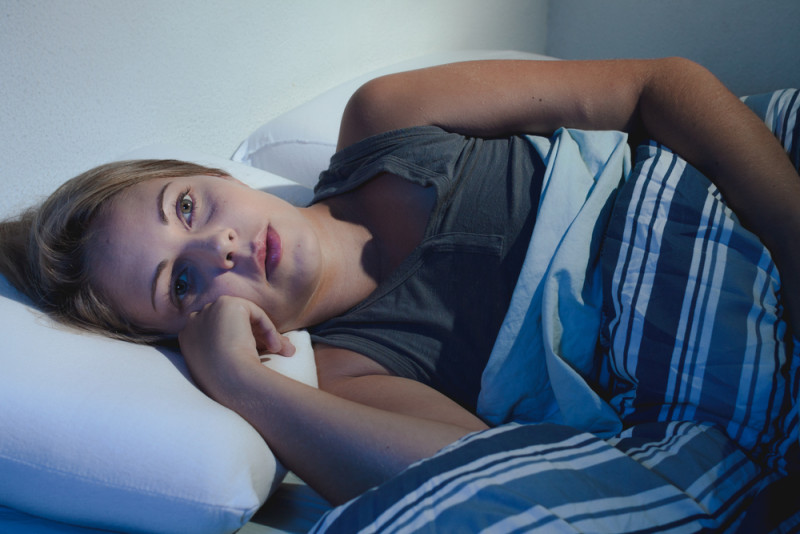
in the long run, it’s been pounded into our heads over and over once more: You need an outstanding night time’s sleep, preferably eight to 10 hours. If you may’t sleep that tons on a nightly basis — and lots of human beings probably ask, “Who can?” — it wouldn’t be unexpected if you assume you’re neglecting your frame’s herbal timeline.
well, relaxation easy in case you get plenty much less than the advocated nightly commonplace. according to research published this autumn in present day Biology, our ancestors, contrary to well-known notion, additionally averaged less than the eight–10 hours we constantly pay interest a lot about. (1)
So, How a whole lot Did Our Ancestors Sleep?
How an lousy lot Did Our Ancestors Sleep?
The UCLA-led team that comprised researchers from Hunter university, Yale university, UC Santa Barbara, the university of new Mexico and, of path, UCLA located that folks that presently have lifestyles very similar to the ones of our evolutionary ancestors sleep a median of less than 6.5 hours a night time. not only that, but the ones people live up a median of three hours and 20 minutes after sundown and seldom nap — that consists of no longer often taking a power nap. (2)
inside the test, researchers clocked sleep patterns most of the Hadza of Tanzania, hunter-gatherers who live near the Serengeti country wide Park; San of Namibia, hunter-gatherers inside the Kalahari desolate tract; and Tsimane of Bolivia, hunter-horticulturalists who stay alongside the Andean foothills. What they observed became that those peoples, all of whom carefully resemble the lifestyles of our early ancestors, sleep much less than seven hours a night time time — six hours and 25 mins on common, to be exact. That’s definitely on the low prevent of the spectrum for adults in Europe and the united states today!
Jerome Siegel, leader of the research team and professor of psychiatry at UCLA’s Semel Institute of Neuroscience and Human conduct — who also is a beyond president of the Sleep research Society — commenced the study two years ago, measuring dozing and waking time, mild exposure, body temperature, and temperature within the environment.
What he positioned changed into indeed sudden. similarly to less sleep than we imagined, those human beings not simplest not often took naps, however those sleep styles showed no proof of taking a negative toll on humans’s fitness. In truth, the human beings studied have decrease degrees of weight problems, blood strain and atherosclerosis than humans in industrialized societies, collectively with higher tiers of physical health.
in addition, “insomnia turned into so uncommon amongst those studied that the San and the Tsimane do no longer have a word for the sickness, which affects greater than 20 percent of americans.”
Sleep temperature may also play a role in this herbal treatment for insomnia, so to speak. The look at found that the ones humans continuously slept in the course of the nightly length of declining ambient temperature and wakened at the same time as temperatures hit the bottom factor inside the 24-hour length. “The pattern led to kind of the same wake-up time each morning, a dependancy prolonged endorsed for treating sleep troubles,” in keeping with the authors.
All 3 organizations additionally get hold of their maximal moderate exposure in the morning, which suggests that morning mild may additionally moreover have the most vital function in regulating temper and the thoughts’s internal clock.
“There’s this expectation that we should all be dozing 8 or 9 hours a night and that in case you took away modern-day generation human beings can be sleeping more,” stated lead writer Gandhi Yetish, a Ph.D. candidate on the college of recent Mexico, who spent 10 months with the Tsimane. “however now for the number one time we’re displaying that’s no longer real.”
the way to Get better Sleep
at the same time as this records indicates we won't continually need 8 to 10 hours of sleep every night time time, in case you’re dropping sleep and usually worn-out, it’s still crucial to get a excellent night’s sleep. Of path, it’s an first rate idea to maintain those new findings in mind, at the same time as also following the following steps (three):
Set the proper temperature to sleep as you’re cooling and wake at the excellent temperature
Set the mood with dim lights
Use important oils that sell sleep, like lavender oil and chamomile oil
Unwind your thoughts
skip sugar and carbs at night
combat that nomophobia (smart cellphone dependancy) and maintain electronics out of bed
preserve a regular sleep time desk
restrict caffeine after midday
exercise session within the morning
magazine earlier than mattress
devour melatonin foods
consume magnesium-rich substances and a magnesium supplement (four)
Don’t matter quantity sheep! It doesn’t paintings
Get sunshine
loosen up with a detox bathtub
Drink chamomile tea
Meditate
educate with full-frame exercise
purchase an excellent mattress
final thoughts on Sleep
This new research indicates that possibly eight to ten hours of sleep in keeping with night time isn't always crucial. this is truely excellent statistics to those night time owls who moreover display as much as be early to upward push — on the facet of folks who are best a little time-crunched.
but, that doesn’t propose you must in fact lower your sleep or attempt no longer to get that recommended eight to 10 hours if you can. Sleep is vitally critical for your popular physical and mental fitness. it could additionally be the most vital factor in preserving a healthy lifestyle. So make certain you get regular sleep by way of way of going to bed and waking up on the identical time each day. It’s the first-rate way to hold your circadian rhythm in check and make the most of your most crucial time of recuperation!

No comments:
Post a Comment